

Louise Smith OBE is joined by Kate Markham, CEO of Hiscox London Market, to explore how leadership and culture are driving meaningful transformation in commercial insurance. From embracing digital, data and AI to the mindset shifts needed to lead change, they discuss what it takes to lead with purpose in a rapidly evolving market.
Transcript for this episode
KATE MARKHAM: Now, everything we've ever done with technology in the past, it was build it in a waterfall fashion, design the requirements, test it to within an inch of its life, and then implement it, and then leave it alone and hope that it doesn't break. The world we're in today couldn't be more different from that.
SPEAKER: You're listening to (Re)thinking Insurance, a podcast series from WTW where we discuss the issues facing P&C, life, and composite insurers around the globe, as well as exploring the latest tools, techniques, and innovations that will help you rethink insurance.
LOU SMITH: Hello, and welcome to the latest edition of (Re)thinking Insurance. My name is Lou Smith, and I will be your host today. Our topic for the podcast is Commercial Insurance Transformation. But we're specifically looking at the importance of leadership and the culture in making a shift in what we're seeing at the moment with digital artificial intelligence and actually the use of data. You could argue those things have always been key over the last few years, but obviously, we're seeing pace change. I am delighted to be joined by Kate Markham today of Hiscox Insurance. Kate, welcome.
KATE MARKHAM: Thank you. Hi, Lou.
LOU SMITH: Great to see you and great to have you here. Kate, do you want to first introduce yourself and tell us what you do at Hiscox?
KATE MARKHAM: Yeah, absolutely. So I joined Hiscox 13 years ago. I think I'm relatively unusual in the industry in that I haven't been in insurance all of my life, so I'm still a newcomer. But I joined Hiscox in 2012 to lead their smallest ticket business, the direct-to-consumer bit. And then after a few years there, I flipped into leading the London Market business. And predominantly we trade through loads of London, but not exclusively.
LOU SMITH: Wow. So that's a story no doubt we're going to talk about, some of those shifts that you've seen from when you started to where you are today. And, Kate, you are seen, and the team you've got, which I've been really privileged to spend a bit of time with, actually, as really facing into the challenges that we're seeing at the moment with the convergence of technologies, so not just the rise of artificial intelligence.
But obviously, we're seeing increases in quantum, so the speed in which you can process data today. That shift of having lots of data in organizations becoming more data rich and data-centric. Making sure that is being used to drive decisions, you could argue, in this market that's been there forever.
And also, as we now start to see the skills and the talent that we need within our organizations to succeed with all of those things going on. You have actually been-- you might hate me saying this-- as leading in that space. And before I move on, congratulations for being recognized for innovation. But I don't think it's just innovation. I think how you apply the practical application of those things is quite incredible, really, because the hard thing is actually getting them scaled and getting them used. So we're going to touch on all of that if that's OK.
KATE MARKHAM: Not sure what I say to any of that.
LOU SMITH: But we're going to touch on all of it. So if I just get a perspective from you, and I'm happy to share views as well, but when you look at the commercial insurance industry today, what are the couple of things that you think, oh, even in the last year, that's changed?
KATE MARKHAM: I think we're moving from how to now. So it's the big shift from trying to understand what technology can do into actually trying it, running proofs of concepts, and then where we are now in the journey is we're actually beginning to implement it at scale. And that's exciting but frightening at the same time.
LOU SMITH: Yeah. I love that because I think one of the things you've said there straight away is, and I think it's the thing that a lot of people battle with is, how do you get it off paper and how do you just try. And I'm sure you've seen some of those things work and some of them don't. And it's having the-- right.
KATE MARKHAM: It changes. And we might have tried something six months ago, which actually, if we tried the same problem again today, it might work because things have moved on so fast. So I think you have to look at the opportunities in front of you, pick something, try it. If it works, do more of it, and carry on, and roll it out. And if it doesn't go, OK, not necessarily let's never try that again.
But park it, go and do something else, because there might be a different problem you can fix today, and keep in the back of your mind that that opportunity you were trying to go after, the technology maybe wasn't ready, wasn't advanced enough, but it might be in a few months' or a few years' time.
LOU SMITH: I think that's such an important point, and I'm going to try and summarize some of these points, but I love the way you've thought about it, and actually you can feel it in your team as well, it is there's greater risk of not doing anything. So trying and actually some of it might work, some of it doesn't, it's OK.
KATE MARKHAM: Yeah, definitely. And I think that we'll talk about cultural shifts. But I think that idea of experimentation is so key and it is a big departure from where we've come from. Everything we've ever done with technology in the past, it was build in a waterfall fashion, design the requirements, test it to within an inch of its life, and then implement it, and then leave it alone and hope that it doesn't break.
The world we're in today couldn't be more different from that. You're picking up things that have never been done before. You're trying them. Some of them work and some of them don't. And that concept of accepting failure is a big shift, especially in our industry, where people like to be precise, they like to be data-driven, and they like to know that they're on safe ground and things aren't going to go wrong.
LOU SMITH: Yeah. It's really funny because, again, that concept isn't new, fail fast, and love it while you're failing, and all of that type of stuff. But it's a really hard thing to do.
KATE MARKHAM: We don't love failing.
LOU SMITH: No. I remember there was this story, wasn't there, from Google actually. And they tried something, it didn't work, and then they bought cakes in as though they were celebrating the thing that didn't work in the same way as when you celebrated something that did work. And that didn't work at all, because psychologically, as humans, it's a really difficult thing to celebrate failure or celebrate the decision of not moving forward with something. How do you embed that thinking into your team?
KATE MARKHAM: I don't think we have. And I wouldn't say the job is ever done on that front. We are talking about shining a light on the bits that we haven't been successful at. We haven't done it yet, but we run town halls with the business unit. And I was having a conversation yesterday actually just saying, should we put some of these stories up on stage, should we talk about them rather than trying to sweep them under the carpet and always highlight everything that's going so brilliantly.
Maybe we need to shift on that front to start to try and embed that culture where failure is OK. Because it's not win or lose. It's win or learn. And we learn so much by trying. And as I say, so let's move on, pick ourselves up again, and do something different.
LOU SMITH: Yeah, I wrote two things down as you were talking then about there's always a learn. Always a learn. And as you say, that learn might be not now, but it might be relevant for another use case in the future. But I think the second bit is, and it's one I've tried, but actually, the one thing I think you can control is the environment in which people operate. So how can you make that fearless so that people are prepared to try?
And that's the bit that I keep trying to create within my teams is, how do you enable people when they come in to go, it is OK. It is OK to put your view on it, to even drive that decision yourself, to create a space where you feel like you can just push forward. And it's so easy to say, but it's really tricky to do because inherently, we apply a risk lens on those things.
KATE MARKHAM: I think the answer has to be storytelling again and again and again. Interestingly, you used the word fearless. We launched a new strategy for 2030 in January. And our number one goal is every team a fearless team. And again, hence we were talking about it yesterday, how are we doing as a team in terms of bringing that to life. Where are we?
So we're going to gather metrics on how people feel today, psychological safety, all the things you'd expect us to measure. But really, what are the actions and the behaviors that we've exhibited in the last 12 months that are showing that we mean what we say and that that goal is something that we are 100% committed to? We've got other much more smart goals that underpin that. But we decided as a team, our number one goal is going to be every team of fearless team.
LOU SMITH: But if you get that right, those are the metrics flow off the back of that.
KATE MARKHAM: Will flow, hopefully.
LOU SMITH: In fact, you'll probably get more than you expected because people will feel free to drive those ideas forward. So, Kate, that's really helpful. Let me start switching it into some of the challenges that we see today. I haven't been in this industry very long, actually. As you know, I came from the retail banks. And we've had a few financial crises that we've generated over those years.
I'm sure my mom, because of where I used to work, she thought I was solely accountable for the financial crisis in about 2016. She phoned me up and she says, what have you done, because I did digital transformation at the time, which I was like, wow, mom, you think I do a lot more than I actually do.
But honestly, when I think about the challenges we had in the retail banks, and I see some similarities. I sat on bank boards when we were talking about the rise of the challengers. And we said, oh, they'll never get clients, and they did. They'll never make any money, and they did and they do. And they'll never get licenses, and they all did. What do you see that kind of at that level is the conversation at the moment around the boards, around the management teams? What are the things that's on top of mind?
KATE MARKHAM: I think there's a bit of everybody has to do it. So it's a very easy to talk yourself out of doing anything because we operate in a market with so many mouths in the chain. And actually, it's easy to say, well, I don't need to do my bit because if the brokers haven't done digitizing their data, then I can sit back and I can just continue to operate in a manual world.
And I think just explaining to people that, actually, we all need to step towards that now, we've all got to start, we've got to get our own ship in order. So I can't start to trade digitally with a broker or with a cover holder if I haven't got the skills, and the capabilities, and the technologies, and the platforms, and the data internally to be able to even have that conversation. So it's not a who goes first debate. It's we all need to go and we all need to go now. Otherwise, we'll be sitting here in 10 years' time still having gone nowhere.
LOU SMITH: I love that. Because even in my short time here, I've only been here a few years, but even in that short time, you've seen a shift from more or less we're going to keep everything secret because not everything's actually competitive. There are some areas we can all collaborate on as an industry that would actually solve pain points for all of us.
And we had similar things in banks. Like when we saw, you'll probably remember when everybody got their retail bank challenger cards, I'm trying to avoid any names, and we were all excited about coral cards and turquoise cards in the pub and they froze and unfroze, but actually they were just prepaid. But there were elements to that that forced us, as heritage organizations to go, actually, are there bits here that we could all just collaborate on, like how we ID customers or how we all authenticate, how we think about sanctions, how we think about KYs?
And I'm seeing saying, even now, that shift of actually, there are areas where we can all work together to collaborate on specific points, but also, how do we make sure that that end-to-end chain works in an effective way because we're a marketplace, at the end of the day. So if the brokers are moving, the carriers are moving, and everything in between is moving, there's bits that we can just support each other and work together on. Are you seeing that?
KATE MARKHAM: Yeah, I completely agree. And I think you need to start with language. Traditionally, we've traded in English, luckily for me. The language in the new world is going to be a common data language. And we are not coming from a place where we have that. And that's where the data council and all of the work that's been done around the core data accord is so critical.
And it's not a competitive advantage. We all need to help identify the standards and get on board with it. And then we need to implement it and make sure that we can talk in that language. Because without that, as a marketplace, we will die.
LOU SMITH: Yeah, I agree. I actually think Sheila Cameron's done an incredible job at actually want to get people to recognize that, then get the debate on the table, and then drive outputs from that. Even those three levels I think is incredibly hard. And I think she's done incredible leadership in that.
KATE MARKHAM: Amazing. Tough topic.
LOU SMITH: Yeah, it is. But there's also a willingness. One of the things you feel in this marketplace, particularly in the London market, is there's that sense of, yes, there's competitiveness, yes, there's also a bit of fear of missing out as well, if I can say that. But there's also a willingness for people to succeed here. And actually, I think that's quite a core part of its culture as well in terms of for all the other bits, there is a genuine pride in this marketplace and for it to continue to be world class, actually.
KATE MARKHAM: Completely agree. We all rise and fall together in most cases, don't we?
LOU SMITH: Yeah, we do. But let's talk about AI specifically. I was actually doing a piece for Edinburgh University recently for their boards and their NEDs. And actually a lot of boards, one of the things you see, and you can translate this into teams is, the challenge with artificial intelligence is it does expose everything in your business model all at the same time.
So you've got projects that organizations have invested in, the shift to cloud, the technology projects that we all saw and whatever else. Some of them worked, some of them didn't. Some of them they've probably lost sight of, let's be truthful. You've then got the skills and talent that you need to bring in to enable these things and do people in this space naturally look at insurance or do they look at the tech organizations?
You've then got, well, actually, how do we equip ourselves as leaders and as board members to even manage the risks associated with this thing? So one of the things that I think we're all battling with at the moment is what does artificial intelligence mean today. And it's changing every day. So talk to me, Kate, about, let's pick one of those areas, say skills, talent, how are you thinking about the makeup of your team as it changed?
KATE MARKHAM: It's changed beyond all recognition over the last few years. If I go back to 2018, we hired two data scientists. I don't think we knew what those people could do. We didn't how to use them. And one of them left after about a year because they couldn't find a way to do meaningful work. They sat on their own in a silo without the ecosystem that they needed around them and they couldn't deliver the value. And I think for them as an individual, it wasn't a good experience. And I'm not proud of that. But gosh, we learned a lot from that.
The other one stayed. She now leads my data science team. And it couldn't be more different now. But I think the key thing is these skills, whether it's data science, data engineering, data analysts, data governance, the software engineers, all of these different deep technical skills that we now need, and we've built teams around those, you can hire the people in, but if you don't have the environment that they need to be successful, then they ultimately won't thrive and won't stay.
And you've touched on it, that starts by getting your data in order. And I hadn't appreciated that none of this works if you don't have data and none of it works if you don't have your data in a modern environment, cleansed, structured, ready to go in a way that they can get their hands on it and work their magic.
LOU SMITH: And it's the hard yards of data. And I think a lot of organizations are seeing that now. Is it the quality we thought it was? Is it in the places we thought it was? And was it telling us what we thought it was?
KATE MARKHAM: And where's the business case? So your pitch to the board, I'd like to implement a cloud data platform. Great. But what benefits are you going to deliver? It's going to cost X million and what am I going to see in 6 months, 12 months, 18 months? It is nigh on impossible to write a business case, I think, to do that. But it's only once you've got that foundation in place that you can then start to do all the super clever stuff.
LOU SMITH: And we're back to your experimentation then, and actually having the confidence to actually drive into a test, into a use case and go well, what is this telling us? And it might be different to what you anticipated. So you're back into that loop again.
KATE MARKHAM: And I remember having that first conversation with my CTO who we hired, who came from a data background. This is in probably about 2021. And he said, Kate, I'm going to rebuild the data science capability. But he said, I need you to understand that I'm going to take a pot of money out of your budget every year, I'm going to give it to them, and I'm going to give them a pile of data and I'm going to tell them to go and play. And he said, I need you to expect that you will get nothing from that.
And I said, well, that doesn't work. And he said, no, no, I need you to know that they're going to go and play, they're going to experiment, and they're probably going to give you nothing back because they will try things and it won't work.
Now, we were really lucky. They went and played. They took on the schedule of values problem. And they developed what we've now talked about more publicly about Halo, which is our cleansing tool for schedule of values. So we struck gold on attempt number one, which is incredibly lucky. Probably not useful in terms of the cultural shift because we didn't learn that pain early on about that experiment and they won't be successful.
So for my CTO, I think he was a bit frustrated in a way that I was then expecting it to always work every time we gave them a chunk of money and said, go and play. But that was his pitch to me. So he knew that the ask was, let us go and play, let us experiment, and expect nothing back.
LOU SMITH: But I think you underestimate this point. I think that's incredible leadership. Because if you look at so many projects where, and let's be honest, we've all done it, like where we've tried to make the numbers work on investments in to new technologies, technologies that have started to combine, ideas, or hunches, or whatever. But you know enough based on the experience and based on the things that you've done before, trying to make that work is so hard.
And you are right, the shift today is how do you prove something is actually a bad idea and not a good one. But moving your mind to think that way, and actually that is part of the Silicon Valley narrative of innovation, is that shift from prove it's bad, not prove it's good. And that's why you see this breakthrough on a persistent basis.
KATE MARKHAM: And accept you failed. So we have a tendency, when we take something on, we just want to keep trying again and again and again to get something to work. And actually the hardest thing is going, enough, stop, just put it down. Let's go and do something else. Pick up the resources--
LOU SMITH: --re-emerging with a different project name.
KATE MARKHAM: Yeah. We're not good at that. We're trying. I can think of one really good example where we tried and we failed, but we kept going at it for way too long.
LOU SMITH: Yeah. And actually, the point, again, we've come full circle to your point of test it, look at what it's measuring, then make the decision are we actually just scaling this now or are we stopping it.
And then you break through somewhere. I want to come back to skills because I think you said something really important about environments, because again, we've all been in a position where we've gone, oh, I'm changing the shape of the team. You engage either your HR teams or a headhunter and you go, I want somebody innovative. They go away and they put somebody in front of you and go, not that innovative.
LOU SMITH: I'm speaking from experience, eh, Kate? You know me.
KATE MARKHAM: I do.
LOU SMITH: So you can imagine that's happened a lot. And then you've got the other one where you go, actually, we're going to go for the innovative person and then we spend all of our time making them the same.
KATE MARKHAM: Yes.
LOU SMITH: We've all done it.
KATE MARKHAM: Get back in your box. Stay within the tram lines, all those phrases.
LOU SMITH: Exactly. Oh, I wasn't quite expecting that. Or worse, you just expect this single person to change the entire culture of 120,000 FTE organizations single-handedly. Yeah, OK, you're just nodding.
KATE MARKHAM: I'm nodding. Yeah.
LOU SMITH: Yeah. So yeah, I've been there a few times.
KATE MARKHAM: --finding people, finding those people that are truly brilliant at their technical skills, but the people that have the human skills to be able to take everyone with them, we've been really lucky with some of our critical hires where you can put them on stage and they can talk in a really, really accessible way about what they're up to.
LOU SMITH: You've just touched on something I am so passionate about. I've met your team, by the way, and they are incredible. And they share a common thing. So again, in this space, and I don't want to lose what you've said because, again, I think you're downplaying just how fantastic are at this is, the problem as well with this type of stuff is we've created a language reserved for the few. And as soon as you say AI, which is a really big topic, isn't it, is everybody runs for the hills and goes, oh, that's not me, it's the technology person. And it can't be.
And actually, one of the things that I love about your team is they've actually simplified the narrative so much that you can not only step into the story of the use case, but you've got enough to make it better, because you can go, oh, I get that, which means I can bring my bit to that. And I think for me, one of the biggest challenges we have with anybody working in the technology space, which I do, is making it so accessible to people that they can actually unlock the power of the thing as it goes into adoption.
I think I mentioned to you, I was doing a keynote for an AI conference, I've said this so many times, but it still blows my mind, and I didn't understand the next agenda item because it said something like the paradigm shift of the parable's implementation of the somethings or other.
And I was like, if we genuinely believe this thing has, and it does, providing it's used ethically to unlock the power of so many parts of not just our industry, but medicine and social challenges, you've got to put it in a way that somebody can actually go, well, I get what it means. So I think that storytelling, that accessible language, and that narrative, I think you and your team, it's one of the best I've seen. It's incredible.
KATE MARKHAM: Thank you. Yeah, we stay away from the tech as much as we possibly can.
LOU SMITH: Yeah. Well, people think I'm a techie, Kate, and I'm not, but I'm going to try it on it. I have done for 30 years. So I'm going to shift this along a little bit and I'm going to start asking you a few more short, sharper questions. I know we didn't rehearse this. But what is the one thing you do to inspire your team, would you say?
KATE MARKHAM: I hate questions like that. But parking that, when we're talking about this, I think link it to the strategy. So this is not a goal in itself. We're not talking about technology, or automation, or digital, or GenAI around a goal in itself. We must do this. We link it directly to where we're going.
So as a business, this is our ambition. This is what we want to achieve in the next five years or so. And in order to do that, these are the things we need to do. And start with the people. Always start with the people. Start with the customers. Start with the brokers. And then, to me, technology, digital and even AI as a subset of that becomes one of the things we can do that will make it possible. So it's actually quite low down, the storytelling that we do.
LOU SMITH: Yeah, I like that. But you've also organized your teams around these product structures, haven't you, where it's one conversation. It's that product-led, driven from a use case, aligned to the organization with the technology teams part of that, the operational view into that. You've got these squads who are all armed with that same use case, driving change.
KATE MARKHAM: We have. And maybe if I talk about claims, because I think we've covered so much has been said about underwriting. We started working on claims maybe 18 months ago. We created a value stream. We've upskilled a lot in the last few years. Our existing project managers have become product managers, so that's one of the shifts we've made from a skills point of view. And we created a claims value stream.
And they started with the claims team going, where are we going, what's our ambition, what's our big, hairy, audacious goal, and what do we want success to look like. And then from there drops out all sorts of things, but a backlog of capabilities that they'd love us to deliver into the business, into the systems that they use. And then you just work your way through that in an agile way led by the value stream.
But yes, those teams are, it's the claims underwriters. It's led and sponsored by the claims team. It's got all of the change people in it. It's got the pricing people. It's got the data. It's got the technology people. They're all together in one squad. One unified vision, one unified goal.
LOU SMITH: And again, I know you say this as though it's obvious, but it's actually a really difficult thing to do. Like Greenfield Organizations, the startups, the disruptors, and the innovators, they naturally work that way. But for organizations with the history, with structures, with underlying rhythms, to move to that is actually quite hard to do.
KATE MARKHAM: Yeah, because we're dealing with business as usual. All those claims people, they're dealing with claims and you're saying to them, in addition to that, can you please take this on as well? Can you please be a subject matter expert on this value stream? I need you to come out of the business for four and a half days and go and work with Google Cloud and do a proof of concept and see whether we can play with some of this stuff. And we're asking for all of that in addition to the day job.
LOU SMITH: I know. So my last question then, Kate, is you've obviously given so much of your career to this industry. And it is an industry that grabs you. What excites you about the next couple of years?
KATE MARKHAM: Look, I said at the beginning that I started in our small ticket business. And when I joined Hiscox, I saw Lloyd's of London. I had never heard of Lloyd's before. And I saw Lloyd's of London. And then I looked at the way we were trading in Lloyd's of London. And I've always been attracted to transformation. And it took me years to persuade Bronek to let me come and work in this part of the business.
But my pitch to him was, I just want to be part of making this all happen. There's a massive opportunity to modernize this industry. There is a massive opportunity for us to genuinely set it up to be the preeminent market for risk for the next 10, 20, 30, 100 years, I hope. And if I can play a tiny role in making that happen, then that's going to be really fulfilling for me as an individual.
So far it's ticking every single box that I ever could have wished for. But I think my summary would be when people say, how are you feeling about it, where are you? I would say, if I'm being really optimistic, I think we're at the end of the beginning because I think we can now see the potential. I think there is belief beginning to happen that we can do this. But my gosh, we're just starting.
LOU SMITH: I think I'm with you on that. Kate, I'm going to summarize a few points that I think you've made that are so key. And I think this first one would be start. And it almost doesn't matter where. But be brave. If it doesn't work, stop it. Go somewhere else. Take the learn. If it does, scale and move.
That power of storytelling, that accessible language, that narrative where you can capture people to go, this is what we're trying to achieve, they'll come with you, they'll follow. But they're also not following a way that they're just following, but they'll bring their ideas as well. So that environment, which you've talked about so passionately of fearless, diverse skill sets, looking at the makeup of those skills on a regular basis, and being brave to change them.
But I think the last one, and I'm pretty sure this has come through the podcast is, it isn't about the technology. It isn't about any of the widgets. But it's about that leadership of enabling people to be that, to move with you, and test those things in a really safe way. And I think you can see why you actually won that award, because it wasn't about the widgets. It was about the fact that you've brought this stuff to life.
And as I said, I've not seen that, not just here in few cases, but even in financial services, we were battling with all the same things. I think it's an incredible story, what you're doing, and I'm really excited to partner with you on some of it.
KATE MARKHAM: Likewise. Thank you very much.
LOU SMITH: So that concludes our journey for today. We're just out of time. Thank you so much again, Kate, for being here. And thanks everyone for listening. Join us next time for our next edition of (Re)thinking Insurance.
SPEAKER: Thank you for joining us for this WTW podcast featuring the latest perspectives on the intersection of people, capital, and risk. For more information, visit the Insights section of wtwco.com
Podcast host
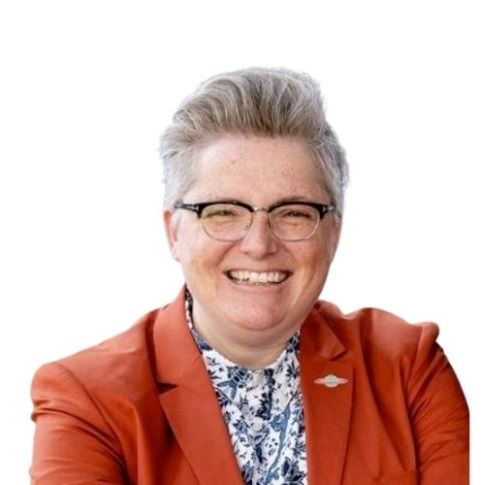
Louis Smith OBE
Neuron Global Leader
Louis Smith OBE
Neuron Global Leader
Podcast guest
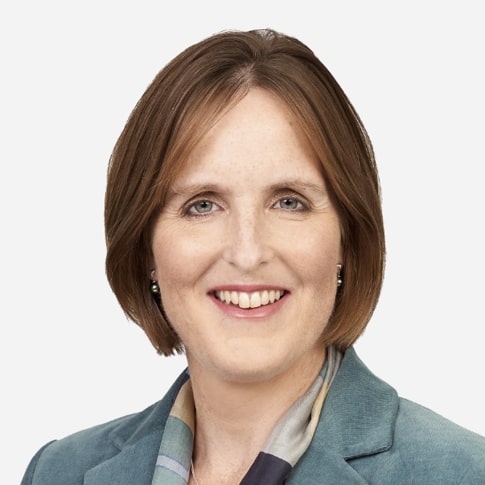
Kate Markham
CEO Hiscox London Market at Hiscox
Kate Markham
CEO Hiscox London Market at Hiscox